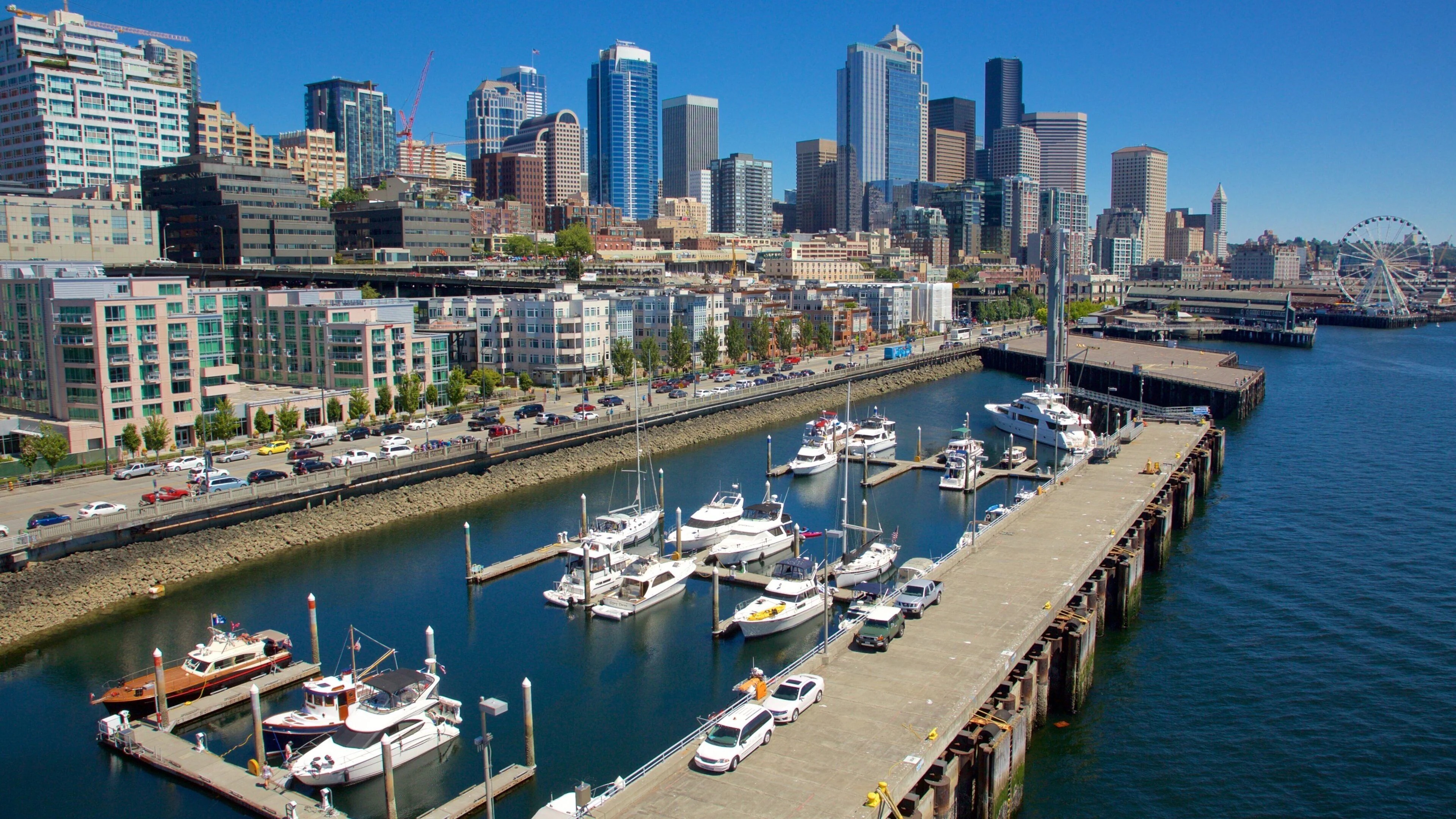
This downtown section should explain how the dense grid changes freight timing, guest arrival, and the amount of buffer the crew needs before doors open. Downtown Seattle, WA should be read through the streets, arrival habits, and support pattern that make this district feel different from the rest of Seattle.
The section has to explain the local tempo around Bell Harbor International Conference Center, the nearby hotel mix, and the travel assumptions that shape labor and freight timing.
When the district is named as an operating zone instead of a pin on a map, the team can plan the move, the handoffs, and the client day with fewer surprises.
The point of Downtown Seattle, WA is to show how this part of the city changes the way the event is actually run.
Downtown Seattle priorities for dense event days
- Plan Downtown Seattle, WA work around nearby venue clusters, hotel inventory, truck access, and travel time between event stops.
- Build Downtown Seattle, WA schedules that account for client movement, vendor calls, dock congestion, and the cutoffs that shape Seattle programs.
- Prioritize crews and suppliers that can move smoothly between Downtown Seattle, WA, Bell Harbor International Conference Center, and nearby support properties.
- Keep Downtown Seattle, WA venue paperwork, security notes, and loading notes in one place so the team can move faster during show week.
- Prepare Downtown Seattle, WA backup timing for traffic, weather, dense calendars, and venue turnover pressure.
- Treat Seattle Convention Core as an operating map for Downtown Seattle, WA rather than a list of unrelated neighborhoods.
About Downtown Seattle, WA
Downtown Seattle, WA is one of the Seattle area submarkets we cover for trade show work.
Trade show work in Downtown Seattle, WA shares most of its structure with larger Seattle projects. Where it diverges is in the nearby venue mix, freight routing, and local hotel block availability.
The Seattle event landscape
Seattle is a working trade show market.
Bell Harbor International Conference Center gives the Seattle market a major waterfront conference option with 100,000 square feet of conference, meeting, and special-event space — a useful reference point when sizing a project.
What makes our work different
Local fabrication means real-time problem-solving. A graphic that needs to be reprinted at 6 a.m.
Clients who run repeat programs across multiple dates end up paying less per event when the same team handles everything. Less re-briefing, less re-training, less re-checking — the operational overhead drops year over year.
Seattle venues we work
The right building depends on the show: a consumer expo wants open aisles and broad traffic flow; a corporate conference wants controlled breakout space; a brand activation wants a venue that can carry scenic and production without fighting the architecture.
Seattle Convention Center: seattle Convention Center anchors downtown Seattle's largest convention and conference activity with multi-building event space, exhibitor services, and published dock-and-freight procedures.
Operational rules on the Seattle floor
Seattle floor operations follow the venue's own manual.
Dock hours, truck-access instructions, bay details, and hand-carried freight rules that explicitly depend on venue approval or show-management direction.
What's included in the project scope
For programs that repeat, asset management becomes part of the engagement — storage, graphic rotation, refurbishment, and re-crating are planned rather than one-off.
Scope boundary is as important as scope inclusion.
What an engagement actually looks like
Once scope is clear, the venue work begins.
One named show-site lead runs the install.
That document drives the next booking.
Pricing and scheduling
Cost scales with how it is built, how big it is, what the venue charges for its own services, what the graphics look like, how far the crates travel, and how many days the team stays on-site.
Rental programs run on 8 to 12.
How project performance gets measured
Trade show ROI is measured at the lead and pipeline level.
The post-show debrief is where the numbers get connected back to the physical booth. Which demo station drew traffic, which meeting area closed more conversations, which graphic zone attracted dwell time — that feedback shapes the next build rather than getting lost.
Do you work at Grand Hyatt Seattle?
Yes. Grand Hyatt Seattle supports downtown conferences, executive events, and sponsor programming within the central convention hotel district with a shorter curb window and a formal tower cadence.
How does labor work in Seattle?
It runs venue by venue.
How much lead time is ideal?
Custom builds run best with 16 to 20 weeks of lead time. Rentals take 8 to 12 weeks.
What information kicks off a project?
The show, the venue, the booth number, the dates, and a target budget range. From those, an initial scope and a realistic cost come back within a few days.
Who runs the booth on-site?
One named show-site lead runs the install, the show hours, and the strike. That person carries the floor plan and the punch list from crates to doors and reports up once a day.
Can the booth travel to the next city on our calendar?
Same structure, swappable graphics, standard crates.
What happens if something breaks during show hours?
The on-site lead handles it.