The Seattle event landscape
Seattle is a working trade show market. Its anchor venues host hundreds of events a year, and the rhythm of load-in, show hours, and strike is well-established across the local vendor base.
Trade show weeks in Seattle compress decisions. Dock windows are finite, rigging slots fill fast, and the labor calendar around a citywide conference runs hot. Exhibitors who treat planning as optional lose time they don't get back.
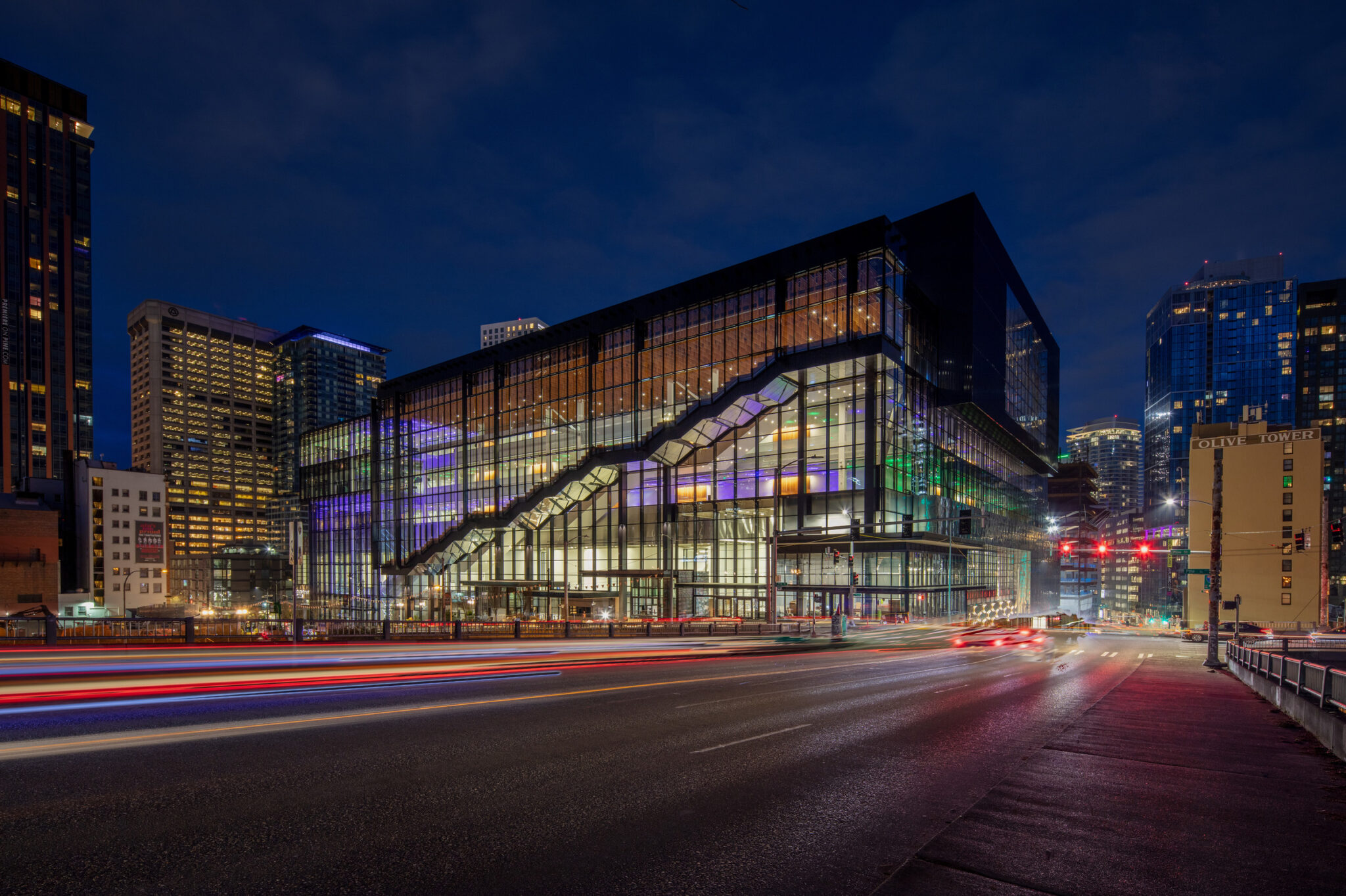
Seattle Convention Center anchors downtown Seattle with planner, exhibitor, venue-service, and dock-and-freight workflows organized around the same central event platform, which sets the practical ceiling for a booth program working the market.
Bell Harbor International Conference Center gives the Seattle market a major waterfront conference option with 100,000 square feet of conference, meeting, and special-event space — a useful reference point when sizing a project.
Seattle venues we work
Seattle events cluster around a small number of venues, and each one has a different personality on the floor.
The right building depends on the show: a consumer expo wants open aisles and broad traffic flow; a corporate conference wants controlled breakout space; a brand activation wants a venue that can carry scenic and production without fighting the architecture.
Hyatt at Olive 8 is one of the anchors. Hyatt at Olive 8 adds downtown ballroom and meeting inventory close to the Seattle Convention Center and adjacent hotel cluster.
Sheraton Grand Seattle. Sheraton Grand Seattle is a core downtown conference hotel for general sessions, breakouts, hospitality suites, and exhibit-adjacent programs with a larger ballroom profile, broader guest-flow capacity, and a more layered routing pattern.
Operational rules on the Seattle floor
Seattle floor operations follow the venue's own manual. Dock timing, utility orders, rigging, and crew calls all come out of that document.
The workable version of Seattle labor planning is boring on purpose: read the manual, match the scope to its categories, order what the venue sells directly, and schedule everything else around its posted windows. Surprises almost always trace back to a step someone skipped.
Dock hours, truck-access instructions, bay details, and hand-carried freight rules that explicitly depend on venue approval or show-management direction.